The Wesley Playing Fields – Our Green Heart
- Joshua Carrington
- Oct 23, 2025
- 5 min read

History and significance of the parkland donated in 1931 and its enduring role in community life
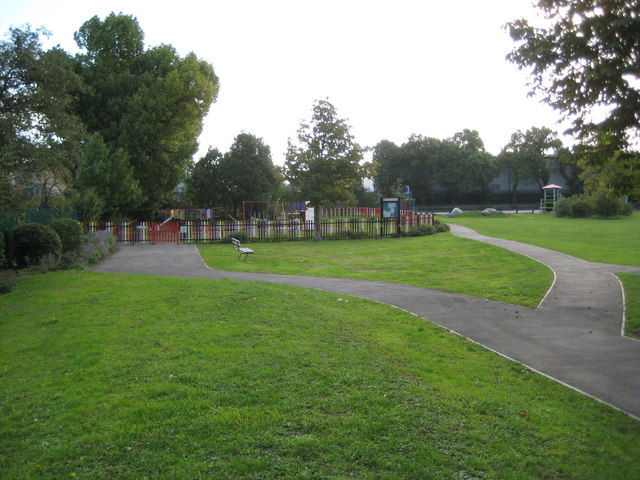
Amid the brick terraces and industrious character of North Acton lies a rare and precious open space — The Wesley Playing Fields, a patch of green that has, for nearly a century, served as the beating heart of community life. To understand its importance, one must look not merely at the grass and trees that shape its form, but at the vision, generosity, and civic foresight that brought it into being in 1931, when Harold Wesley, the philanthropic industrialist behind the Wesley Estate, made a defining contribution to the people of Acton.
A Vision of Balance – Industry and Humanity
By the early 1930s, Acton and Park Royal had become some of the most dynamic industrial zones in Greater London. Factories, depots, and workshops rose across former farmland, offering employment to thousands. Yet Harold Wesley, whose stationery manufacturing firm was among the area’s most respected employers, recognised something that many industrial pioneers overlooked — the necessity of balance. He understood that while bricks and machines could build an economy, green spaces built community.
The donation of land for the Wesley Playing Fields in 1931 was a deliberate and compassionate act. Wesley foresaw that his growing residential estate — home to hundreds of workers and their families — would need a public refuge: a space for recreation, reflection, and unity. In an era when most working-class communities had limited access to leisure or nature, his decision embodied the progressive social values that were beginning to shape modern urban planning.
In essence, Wesley’s gift was not merely land; it was a statement of trust in the human spirit — a belief that communities thrive when people have room to breathe, play, and gather.
Design and Layout – A Functional Green Haven
Early Ordnance Survey maps from the mid-1930s already mark the land as “Wesley Playing Fields,” confirming its rapid establishment as a recognised public amenity. It was designed with practicality in mind: level open grounds suitable for football and cricket, bordered by young trees and accessible pathways connecting the main roads of the estate.
The layout was simple but intentional — a shared green lung framed by the modest interwar housing of Wesley Avenue, Harold Road, and Newark Crescent. For residents, the park served as a daily reminder of generosity and civic pride. Parents could watch their children play safely; workers could unwind after long shifts; neighbours could meet informally, building the social fabric that continues to define the estate today.
In those early years, community sports days, school gatherings, and local fêtes were commonplace. Oral histories collected from older residents recall picnic blankets on the grass, the smell of freshly cut turf, and the friendly rivalries of local football matches — moments that transformed a patch of municipal land into a stage for belonging.
The War Years – A Sanctuary in Uncertain Times
During the Second World War, when much of West London endured the trauma of air raids, the Wesley Playing Fields provided both practical and emotional sanctuary. Like many open spaces across Britain, it served multiple functions: temporary air-raid assembly, a place for emergency drills, and, at times, a quiet refuge for reflection amid the uncertainty of war.
Local accounts from that period speak of families gathering under the trees, children still playing even as the sirens wailed in the distance. The green expanse reminded residents that life, however disrupted, could still hold moments of normalcy. In this sense, the Fields transcended their physical form — they became a symbol of endurance, binding the community together through one of its darkest chapters.
Post-War Renewal – Generations Growing Together
After the war, Acton entered a period of reconstruction and adaptation. The factories of Park Royal resumed full production, and the Wesley Estate — though modest in scale — became a model of post-industrial community life. Through the 1950s and 1960s, the Playing Fields remained central to this renewal. Local schools used the grounds for sports; church groups held fairs and fundraisers; families marked milestones and bank holidays with gatherings that became part of the estate’s seasonal rhythm.
By the 1970s, a new generation of residents — some descendants of the original workers, others newly arrived to the area — viewed the park as their inheritance. It was where first friendships were formed, where Saturday morning football became a rite of passage, and where the estate’s inter-generational bonds deepened.
Even as urban pressures increased and nearby industrial sites began to decline, the Fields endured as a stable, unifying anchor — a piece of continuity amid change.
Cultural Shift and Civic Importance
The latter decades of the 20th century saw West London undergo profound transformation. Immigration diversified the local population; factories gave way to warehouses, studios, and new businesses; and the idea of “community” evolved from occupational unity to cultural inclusivity. Through it all, the Wesley Playing Fields remained constant.
The space absorbed the evolving identity of Acton — now home to families from across the Commonwealth, Europe, and beyond — becoming a microcosm of multicultural London. Community events began to reflect this shift: Caribbean family picnics, South Asian cricket matches, Eastern European football tournaments, and summer gatherings blending music, food, and laughter.
As the decades progressed, Ealing Council’s stewardship and the advocacy of local residents ensured that the park continued to be maintained and improved, even amid fiscal and urban challenges. Its legacy as a donated gift from 1931 acquired new meaning: a democratic green space for all.
Into the 21st Century – Renewal, Recognition, and Responsibility
In the 2000s, the area around North Acton entered the spotlight of London’s regeneration agenda. The Old Oak and Park Royal Development Corporation (OPDC) was established in 2015, tasked with reshaping the region into one of Europe’s largest regeneration zones. Within this evolving urban landscape, the Wesley Playing Fields gained renewed importance — not merely as a recreational area, but as a heritage and environmental asset central to maintaining local identity.
Community organisations, including The Wesley Community CIC, have worked to ensure that any future planning honours the park’s historical and social role. Proposals for ecological improvement, biodiversity planting, and outdoor wellness programmes seek to blend tradition with innovation — protecting the open character of the Fields while enhancing their use for education, sustainability, and public well-being.
For many residents, the park now serves a dual purpose: both a green sanctuary and a symbol of stewardship — a reminder that the estate’s founding ethos of care and balance still guides the community nearly a century later.
A Legacy That Lives and Breathes
What makes the Wesley Playing Fields remarkable is not grandeur or scale, but continuity. Few urban spaces in London have retained such an unbroken line of use and affection. From its founding in 1931 through war, social change, and regeneration, the Fields have stood as a living memorial to community resilience.
Every football match, every community picnic, every dog walker at dawn continues the story Harold Wesley began when he handed over that land with faith in the people who would nurture it.
The grass may be re-seeded, the trees may have changed, and the skyline around North Acton may now rise higher than ever — but the spirit of the Wesley Playing Fields remains the same: a place for all, given by one, sustained by many.
Looking Forward – The Wesley Community CIC’s Commitment
As The Wesley Community CIC continues to champion local renewal, social inclusion, and environmental stewardship, the Playing Fields represent more than a park — they are our moral and historical compass. They remind us that lasting progress begins with generosity and shared purpose.
Our collective goal is not simply to preserve a green space, but to celebrate it as a living symbol of Acton’s heritage and hope. Through future partnerships with Ealing Council, OPDC, schools, and residents, we aim to protect the park’s integrity, expand community engagement, and ensure that this gift from 1931 continues to enrich lives for generations to come.
In every sense, the Wesley Playing Fields remain what they have always been — our green heart.


Comments